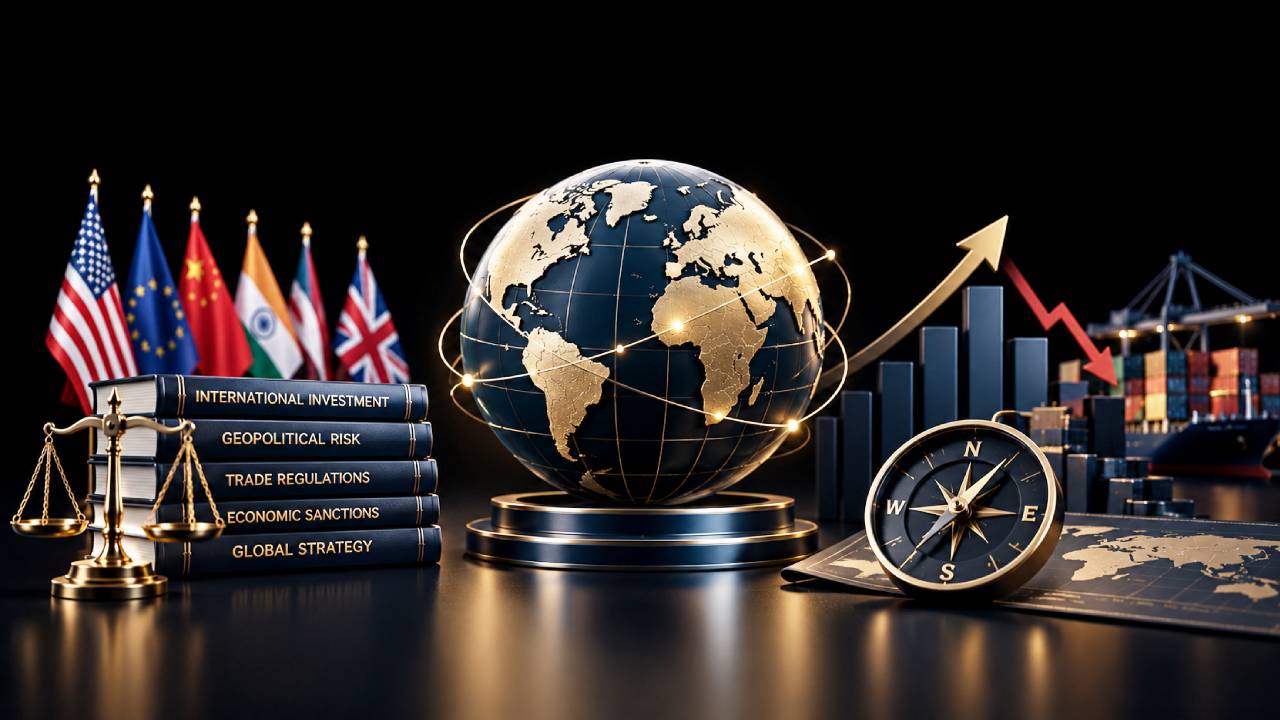
International investment has entered a new era where political developments influence business decisions as much as economic performance. Geopolitical Risk has become a critical consideration for multinational companies seeking long term growth across global markets. Investors now evaluate political stability, diplomatic relations, trade policies, and national security concerns before committing capital to a new country. As global uncertainty continues to evolve, businesses are reshaping investment strategies to protect assets, improve resilience, and maintain sustainable growth in an increasingly complex international environment. Foreign investment today extends beyond identifying profitable markets. Organisations also seek jurisdictions offering regulatory certainty, stable governance, and secure business conditions capable of supporting long term commercial success.
Geopolitical Risk and Its Influence on Foreign Investment
Geopolitical Risk refers to the possibility of political events or international developments affecting economic activity, commercial operations, or investment performance. These events may include diplomatic disputes, armed conflicts, trade restrictions, economic sanctions, government policy changes, territorial disagreements, and political instability. Businesses investing internationally often commit significant financial resources for many years. Manufacturing facilities, infrastructure projects, research centres, logistics networks, and technology investments require stable operating environments. Political uncertainty may delay projects, increase operational costs, or reduce investor confidence. As a result, geopolitical considerations have become an essential element of modern investment planning.
Why Investors Closely Monitor Geopolitical Risk
Global investors seek certainty when expanding into international markets. Political developments can influence regulations, taxation, international trade, currency stability, and supply chain efficiency. Understanding geopolitical conditions enables businesses to identify potential challenges before entering new markets.
1. Political Stability Supports Investment Confidence
Stable governments provide predictable business environments where companies can plan long term operations with greater certainty. Frequent political changes or inconsistent policies may increase investment risks and reduce commercial confidence.
2. Trade Policies Affect International Expansion
Import regulations, export controls, tariffs, and trade agreements influence manufacturing costs and market access. Businesses therefore monitor international trade relations before establishing production facilities or regional distribution networks.
3. Supply Chain Security
Political tensions may disrupt transportation routes, supplier relationships, and logistics operations. Diversified supply chains reduce dependence upon individual regions while improving business continuity during periods of geopolitical uncertainty.
Currency and Financial Stability
Political developments frequently influence exchange rates, inflation, and capital flows. Stable financial environments help businesses forecast costs more accurately and protect investment returns.
How Geopolitical Risk Is Changing Global Investment Strategies
Businesses no longer rely upon traditional investment models focused primarily on production costs and market size. Modern investment strategies include extensive geopolitical analysis before selecting expansion destinations. Companies increasingly diversify manufacturing operations across multiple countries, strengthen regional supply chains, and establish contingency plans capable of responding quickly to political disruptions. This strategic approach improves resilience while reducing operational exposure.
Regional Diversification Is Becoming a Priority
Many multinational organisations previously concentrated manufacturing within limited geographical areas. Recent geopolitical developments encouraged businesses to distribute production across multiple jurisdictions. Regional diversification reduces dependence upon individual countries while improving flexibility during periods of political or economic disruption. Investors increasingly evaluate several potential destinations before selecting locations capable of supporting long term growth.
Legal and Regulatory Stability Matters More Than Ever
Political stability alone does not guarantee investment confidence. Businesses also examine legal certainty, judicial independence, regulatory transparency, intellectual property protection, taxation frameworks, and contract enforcement before entering international markets. Clear legislation enables organisations to understand compliance obligations while reducing regulatory uncertainty. Companies planning foreign business investment frequently seek professional legal guidance to assess jurisdiction specific requirements before making strategic expansion decisions.
The Role of Risk Management in International Investment
Risk management has become central to global investment planning. Businesses conduct extensive due diligence covering political developments, economic performance, regulatory changes, labour availability, environmental obligations, and infrastructure quality. Scenario planning allows organisations to prepare responses for possible geopolitical developments affecting commercial operations. Insurance solutions, diversified supplier networks, alternative logistics routes, and regional production facilities strengthen investment resilience. Comprehensive planning enables businesses to continue operating even during periods of international uncertainty.
Technology Improves Geopolitical Risk Assessment
Artificial intelligence, predictive analytics, and advanced data platforms have transformed geopolitical analysis. Businesses now monitor political developments, regulatory announcements, trade policies, financial indicators, and global news in real time. Advanced analytics identify emerging risks before they significantly affect commercial operations. Technology therefore supports faster decision making while improving investment planning. Despite these technological advances, experienced legal and commercial professionals remain essential when interpreting complex geopolitical developments.
India’s Position in a Changing Global Investment Landscape
India continues strengthening its position as a preferred destination for international investment. Its expanding domestic market, skilled workforce, improving infrastructure, digital economy, and ongoing regulatory reforms support long term investor confidence. Many businesses seeking alternatives within global supply chains increasingly evaluate India because it combines manufacturing capability with growing consumer demand. Government initiatives supporting industrial development, digital governance, infrastructure investment, and innovation continue enhancing India’s competitiveness. International organisations exploring business setup services in india often recognise the country’s balanced combination of economic opportunity, legal reforms, and strategic geographic location.
Geopolitical Risk Encourages Sustainable Investment Planning
Long term investment success depends upon balancing commercial opportunity with responsible risk management. Businesses increasingly consider environmental, social, and governance principles alongside geopolitical analysis. Sustainable investment planning encourages organisations to establish resilient operations capable of adapting to political, economic, and environmental changes. Investors also recognise the importance of maintaining responsible supplier relationships, ethical governance, and transparent business practices across international operations.
Challenges Facing Global Investors
Although diversification and technology improve investment resilience, geopolitical uncertainty continues presenting significant challenges. Rapid policy changes, diplomatic disputes, economic sanctions, regional conflicts, cybersecurity threats, and changing regulatory expectations require continuous monitoring. Businesses must remain adaptable while maintaining compliance with local and international legal requirements. Professional legal advice plays an important role in managing these evolving risks.
Future Trends in Global Foreign Investment
Geopolitical Risk will remain an influential factor shaping international investment during the coming decade. Businesses are expected to continue diversifying manufacturing, strengthening regional supply chains, investing in digital technologies, and expanding risk management capabilities. Governments seeking greater foreign investment will likely focus on regulatory transparency, infrastructure development, digital governance, and stable commercial policies. International cooperation through trade agreements and investment protection frameworks may also improve investor confidence across global markets. Successful businesses will combine commercial opportunity with careful geopolitical assessment when selecting future investment destinations.
Best Practices for Businesses Managing Geopolitical Risk
Organisations entering international markets should regularly review political developments, evaluate legal changes, diversify operational activities, strengthen supply chain resilience, and conduct ongoing compliance assessments. Scenario planning supports faster responses during periods of uncertainty while maintaining business continuity. Collaboration between legal advisers, financial experts, commercial leaders, and operational teams enables organisations to make balanced investment decisions based upon both opportunity and risk.
Conclusion
Geopolitical Risk has become one of the defining factors influencing modern foreign investment strategies. Investors increasingly evaluate political stability, legal certainty, trade policies, regulatory transparency, and supply chain resilience before entering international markets. Businesses capable of integrating geopolitical analysis into strategic planning are better positioned to manage uncertainty while identifying sustainable growth opportunities. As global economic relationships continue evolving, informed decision making supported by legal expertise, comprehensive due diligence, and proactive risk management will remain essential for successful international investment.
Frequently Asked Questions (FAQs)
What is Geopolitical Risk?
Geopolitical Risk refers to political events or international developments capable of affecting business operations, investment performance, economic stability, or international trade.
Why is Geopolitical Risk important for foreign investment?
Political uncertainty may influence regulations, taxation, supply chains, currency stability, and market access. Investors therefore evaluate geopolitical conditions before making investment decisions.
How does Geopolitical Risk affect international businesses?
It may increase operational costs, delay projects, disrupt supply chains, affect financial markets, and create regulatory uncertainty.
How can businesses reduce Geopolitical Risk?
Businesses reduce risk through market diversification, strong legal compliance, supply chain resilience, political monitoring, and comprehensive due diligence.
Why are investors diversifying global operations?
Diversification reduces dependence upon individual countries while improving business continuity during political or economic disruptions.
Why is India attracting international investors despite global uncertainty?
India offers a growing economy, skilled workforce, improving infrastructure, regulatory reforms, digital transformation, and strong domestic demand supporting long term investment.
What role does technology play in managing Geopolitical Risk?
Artificial intelligence, predictive analytics, and data platforms help businesses monitor political developments, identify emerging risks, and improve strategic decision making.
What legal factors should investors consider before international expansion?
Investors should evaluate corporate regulations, taxation, employment laws, intellectual property protection, contract enforcement, dispute resolution, environmental compliance, and sector specific approvals.