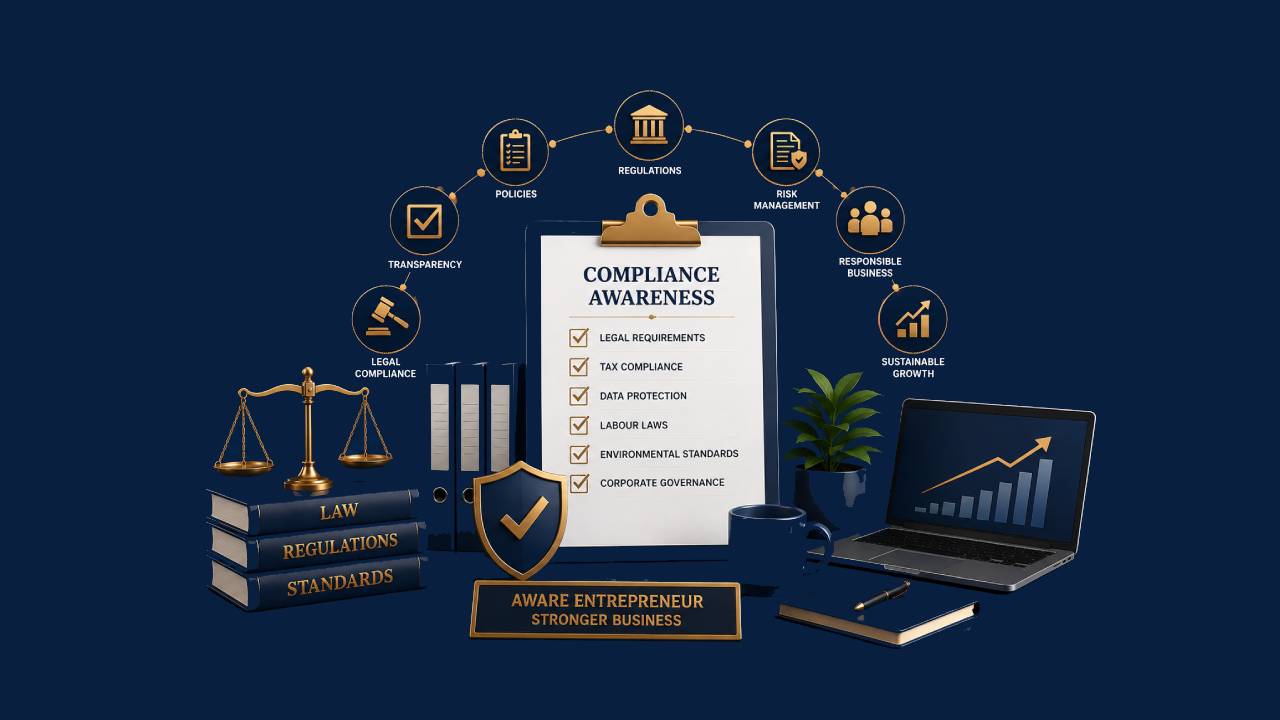
In recent years, business compliance awareness has become a major focus for Indian entrepreneurs. Startups, small businesses, and established enterprises are paying closer attention to legal obligations, financial reporting, tax regulations, and corporate governance. This shift reflects the changing business environment in India, where regulatory transparency and digital governance are shaping the future of entrepreneurship.
Modern entrepreneurs understand the importance of operating within the legal framework from the very beginning. Increased government monitoring, stricter penalties, digital filing systems, and investor expectations have encouraged businesses to adopt better compliance practices. As a result, compliance is no longer viewed as a routine legal formality. It is now considered an essential part of sustainable business growth.
Understanding Business Compliance in India
Business compliance refers to the process of following legal, financial, and regulatory requirements applicable to a company. These obligations may include company registration, tax filings, annual returns, labour law compliance, GST filings, accounting standards, and corporate governance practices. Indian businesses operate under several laws regulated by authorities such as the Ministry of Corporate Affairs, Income Tax Department, Goods and Services Tax Network, and Reserve Bank of India. Entrepreneurs must ensure regular compliance to avoid penalties, legal disputes, or restrictions on business operations. The increasing focus on business compliance has become more visible due to digital reforms introduced by the Indian government. Online filing systems, automated tracking, and transparent reporting mechanisms have reduced opportunities for non compliance and improved accountability.
Why Business Compliance Awareness Is Growing Rapidly
1. Digital Governance Has Increased Transparency
India’s digital transformation has significantly improved the monitoring of businesses. Government departments now rely on integrated online platforms to track tax filings, company records, and financial disclosures. For example, GST filings, MCA annual returns, and income tax submissions are now interconnected. Any mismatch in records can trigger notices or investigations. Entrepreneurs have realised the importance of maintaining accurate records and timely filings. Digital governance has also simplified compliance procedures. Online registration portals, e filing systems, and automated reminders have made legal compliance easier for startups and small businesses.
2. Investors Prefer Compliant Businesses
Investors today conduct detailed due diligence before funding startups or companies. Businesses with poor compliance records often struggle to attract investment opportunities. Venture capital firms, angel investors, and financial institutions prefer companies with transparent operations, proper bookkeeping, and timely regulatory filings. Compliance reflects professionalism and reduces legal risks for investors. This trend has encouraged entrepreneurs to prioritise compliance from the early stages of business formation. Many startups now seek professional legal and financial guidance to maintain clean compliance records.
3. Government Penalties Have Become Stricter
Indian regulatory authorities have increased scrutiny on businesses failing to meet legal obligations. Penalties for delayed filings, tax defaults, or inaccurate disclosures can be substantial. The Ministry of Corporate Affairs regularly imposes penalties on companies for non compliance related to annual returns, board meetings, and statutory records. Similarly, GST authorities monitor businesses closely for tax mismatches and fraudulent claims. As awareness regarding these penalties grows, entrepreneurs are becoming more proactive about fulfilling compliance requirements on time.
4. Rising Startup Culture Has Increased Legal Awareness
India has emerged as one of the world’s fastest growing startup ecosystems. With thousands of startups entering the market every year, awareness regarding legal and financial responsibilities has also increased. Entrepreneurs are now more informed about the risks of operating without proper legal structures. Many founders conduct detailed research before starting their businesses and consult professionals for guidance on company registration, taxation, and legal compliance. The popularity of startup education programmes, online legal resources, and business consultancy platforms has further improved awareness levels among entrepreneurs.
The Role of Regulatory Reforms in Compliance Awareness
Regulatory reforms introduced in recent years have played a major role in improving business compliance awareness across India. The introduction of GST created a unified tax structure and increased the importance of proper invoicing, accounting, and reporting. Businesses now maintain organised records to ensure smooth tax compliance. Similarly, reforms under the Companies Act have strengthened corporate governance standards for businesses. Directors are expected to maintain accurate records, hold mandatory meetings, and file annual returns within prescribed deadlines. The government’s push towards ease of doing business has also encouraged entrepreneurs to adopt legal business structures. Many businesses are exploring options related to new company formation in india to establish credibility and comply with regulatory requirements from the beginning.
Importance of Compliance for Business Growth
1. Builds Trust and Credibility
A compliant business creates a positive impression among customers, investors, vendors, and financial institutions. Timely compliance demonstrates reliability and professionalism. Businesses with strong compliance records often find it easier to secure loans, partnerships, and government approvals. Customers also prefer companies with transparent operations and ethical business practices.
2. Reduces Legal and Financial Risks
Non compliance can lead to penalties, legal disputes, and reputational damage. In severe cases, authorities may freeze bank accounts or restrict business activities. Regular compliance helps businesses avoid unexpected legal complications and financial liabilities. It also ensures smooth business continuity.
3. Improves Operational Efficiency
Businesses maintaining proper records and financial documentation generally operate more efficiently. Compliance processes encourage systematic accounting, organised reporting, and better financial management. This structured approach supports long term business planning and improves decision making for entrepreneurs.
4. Supports Business Expansion
Companies planning to expand operations, enter international markets, or attract investors require proper legal documentation and compliance records. Businesses with consistent compliance practices are better positioned for growth opportunities compared to companies with incomplete records or regulatory issues.
5. Growing Awareness Among Small Businesses and MSMEs
Earlier, compliance awareness was mainly associated with large corporations. Today, small businesses and MSMEs are also recognising its importance. Government initiatives promoting digital payments, GST registration, and formal business structures have encouraged small businesses to enter the organised economy. As a result, compliance awareness has expanded beyond metropolitan cities into smaller towns and emerging business hubs. MSMEs now understand the benefits of maintaining compliance, including easier access to loans, government schemes, and financial assistance programmes. Entrepreneurs are also researching operational costs and regulatory requirements before incorporation. Queries regarding the private limited company registration cost in india have increased as more businesses aim to establish legally recognised entities.
Technology Is Simplifying Compliance Management
Technology has transformed the way businesses manage compliance. Cloud accounting software, automated tax tools, and online compliance platforms have reduced the complexity of regulatory processes. Entrepreneurs can now track filing deadlines, generate reports, and manage financial records more efficiently. Automated reminders and digital documentation have minimised errors and improved accuracy. Professional service providers are also using technology to offer compliance support to startups and businesses across India. This accessibility has contributed significantly to growing compliance awareness.
The Influence of Social Media and Online Education
The internet has become a major source of legal and business knowledge for entrepreneurs. Social media platforms, webinars, podcasts, and business blogs regularly discuss topics related to taxation, company law, startup regulations, and financial compliance. Young entrepreneurs are actively consuming educational content regarding business operations and legal responsibilities. This easy access to information has reduced confusion surrounding compliance procedures. Online awareness campaigns by government departments and business communities have also improved understanding of legal obligations among first time entrepreneurs.
Future of Business Compliance in India
The future of business compliance in India is expected to become more technology driven and data focused. Artificial intelligence, automated audits, and integrated reporting systems may further strengthen regulatory oversight. Businesses will likely face stricter monitoring regarding financial transparency, data protection, environmental compliance, and corporate governance. Entrepreneurs who adopt compliance oriented practices early will gain long term advantages. As India continues to promote entrepreneurship and digital governance, compliance awareness will remain a critical aspect of responsible business management.
Conclusion
The rise in business compliance awareness among Indian entrepreneurs reflects the evolving nature of India’s business ecosystem. Entrepreneurs now understand that compliance is not merely a legal obligation but a strategic necessity for sustainable growth. Digital governance, investor expectations, stricter penalties, and startup culture have collectively contributed to this growing awareness. Businesses are increasingly prioritising transparency, financial discipline, and regulatory accountability. In the coming years, compliance will continue to play a defining role in shaping successful businesses in India. Entrepreneurs who maintain proper legal and financial practices will be better prepared to build credible, scalable, and future ready enterprises.
Frequently Asked Questions (FAQs)
What is business compliance awareness?
Business compliance awareness refers to understanding and following the legal, financial, and regulatory obligations applicable to a business. It includes tax compliance, company filings, labour law adherence, and financial reporting.
Why is compliance important for Indian entrepreneurs?
Compliance helps businesses avoid penalties, build credibility, attract investors, and maintain smooth operations. It also supports long term growth and financial transparency.
What happens if a company fails to meet compliance requirements?
Non compliant businesses may face penalties, legal notices, financial restrictions, or reputational damage. In serious cases, authorities may initiate legal proceedings against the company and its directors.
How has GST increased compliance awareness in India?
GST introduced a transparent digital tax system requiring regular filings and proper invoicing. Businesses now maintain organised records to avoid tax mismatches and penalties.
Do startups need to follow compliance requirements?
Yes. Startups must comply with company law, tax regulations, labour laws, and other applicable legal obligations from the beginning of operations.
How can small businesses manage compliance effectively?
Small businesses can manage compliance through professional guidance, accounting software, automated filing systems, and regular monitoring of legal obligations.
Is compliance necessary for attracting investors?
Yes. Investors prefer businesses with proper legal structures, transparent records, and consistent compliance history as it reduces financial and legal risks.
What are the common compliance requirements for Indian companies?
Common requirements include GST filings, income tax returns, annual ROC filings, bookkeeping, TDS compliance, labour law compliance, and maintenance of statutory records.
How is technology helping businesses with compliance?
Technology simplifies compliance through automated reminders, cloud accounting systems, online filing platforms, and digital record management tools.
Will compliance regulations become stricter in the future?
Yes. Regulatory authorities are expected to increase digital monitoring and transparency requirements, making compliance even more important for businesses.