
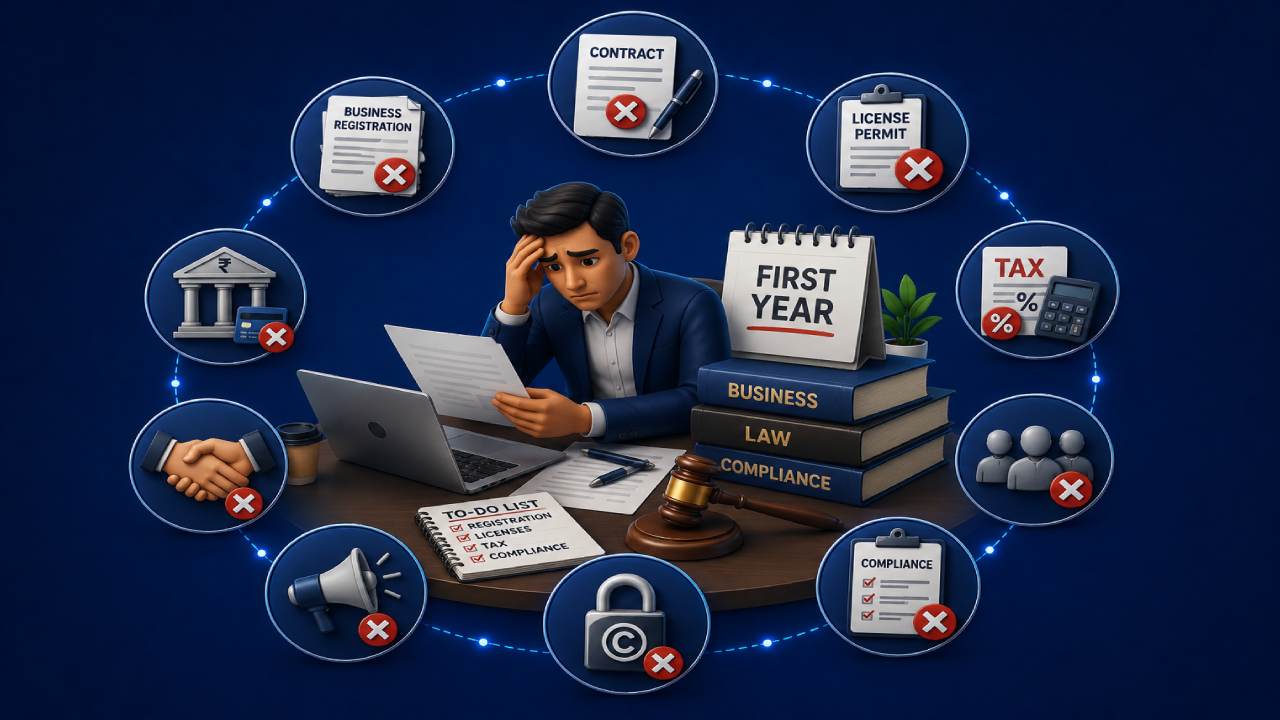
Launching a business brings excitement, ambition, and endless responsibilities. Yet many founders overlook important legal requirements during the early stages. Some of the most serious legal mistakes by entrepreneurs happen within the first year of business operations. These mistakes often create compliance problems, financial penalties, investor concerns, and avoidable disputes. In India, startups and small businesses operate within a detailed legal framework involving taxation laws, corporate regulations, labour compliance, and contractual obligations. Entrepreneurs who ignore these responsibilities often face operational disruptions later. Legal planning may not appear urgent in the beginning, but it plays a critical role in building a stable and scalable business.
This article explains the most common legal errors entrepreneurs make during the first year of business and how these issues can be avoided through proper planning and compliance management.
Why Legal Awareness Matters for Entrepreneurs
Many entrepreneurs focus entirely on sales, product development, and customer acquisition during the first year. While business growth remains important, legal compliance forms the foundation of long term sustainability. A business without proper legal structure and documentation faces greater risks. Investor confidence may decline, financial management may become inconsistent, and disputes may become difficult to resolve. Entrepreneurs who establish strong legal systems early often scale more efficiently and build stronger credibility with clients, investors, and financial institutions.
Common Legal Mistakes by Entrepreneurs in the First Year
1. Choosing the Wrong Business Structure
One of the most frequent mistakes involves selecting an unsuitable business structure. Many founders choose sole proprietorships or informal partnerships because they appear easy and inexpensive. However, these structures may not support long term growth, investor participation, or liability protection. Entrepreneurs often realise later their chosen structure creates taxation limitations and operational complications. Before launching operations, founders should evaluate scalability, funding goals, liability exposure, and compliance obligations carefully.
2. Operating Without Written Agreements
Many startups begin operations based on verbal discussions among founders, vendors, freelancers, or business partners. This creates confusion when disagreements arise. Written agreements help define ownership rights, payment terms, confidentiality obligations, responsibilities, and dispute resolution mechanisms. Without documentation, businesses often struggle to enforce rights legally. Entrepreneurs should formalise agreements with co founders, employees, consultants, suppliers, and clients from the beginning.
3. Ignoring Intellectual Property Protection
Brand names, logos, software, product ideas, and creative content represent valuable business assets. Yet many entrepreneurs delay trademark registration and other intellectual property protection measures. This mistake can become expensive if competitors register similar brands or misuse original work. Startups operating in technology, ecommerce, digital marketing, and product development sectors face higher intellectual property risks. Early trademark and copyright protection strengthens brand ownership and supports long term business value.
4. Missing Tax Registrations and Filings
Tax compliance remains one of the most overlooked areas during the first year of business. Some entrepreneurs delay GST registration, fail to maintain invoices properly, or ignore tax deduction obligations. Such mistakes often result in penalties, interest liabilities, and notices from authorities. Proper accounting systems and timely filings help businesses avoid unnecessary financial complications. Entrepreneurs should understand applicable GST, income tax, and TDS obligations before commencing operations.
5. Mixing Personal and Business Finances
Another common legal and accounting mistake involves using personal bank accounts for business transactions. This creates confusion during audits, taxation assessments, and investor due diligence. A separate business bank account improves financial transparency and supports organised bookkeeping. It also helps entrepreneurs track revenue, expenses, and compliance obligations more effectively. Maintaining clear separation between personal and business finances remains essential for long term operational discipline.
6. Failure to Comply with Labour Laws
Many startups hire employees casually during the initial growth phase without formal contracts or compliance procedures. This creates significant legal exposure later. Businesses must comply with employment related laws concerning salaries, working conditions, provident fund obligations, gratuity, and workplace policies where applicable. Entrepreneurs should also implement confidentiality clauses and intellectual property ownership provisions within employment agreements. Failure to manage employee compliance properly may lead to disputes and penalties.
7. Delaying Business Registration
Some entrepreneurs continue operating informally even after generating revenue and signing commercial contracts. Delayed registration creates problems related to taxation, liability, and investor confidence. Formal incorporation establishes a separate legal identity and supports operational credibility. Businesses seeking funding or expansion opportunities usually require structured registration early. Founders planning to start a company in india should understand the importance of timely incorporation and legal compliance from the beginning.
8. Ignoring Data Privacy and Website Policies
Digital businesses often collect customer information without implementing proper privacy policies or terms of use. This creates legal risks, especially for ecommerce, SaaS, fintech, and online service platforms. Privacy documentation explains how customer data is collected, stored, and processed. Businesses handling payment information or sensitive personal data should prioritise cybersecurity and regulatory compliance. Strong privacy practices improve customer trust and reduce exposure to legal disputes.
9. Poor Record Keeping and Documentation
Many entrepreneurs fail to maintain organised records during the first year. Missing invoices, unsigned contracts, incomplete accounting records, and undocumented business decisions create complications during audits and funding rounds. Proper documentation supports legal compliance and operational transparency. It also simplifies taxation management and investor due diligence. Businesses should maintain digital and physical records systematically from the start.
10. Ignoring Founder Agreements
Startups with multiple founders often avoid discussing ownership terms formally during the early phase. This creates confusion regarding equity distribution, decision making authority, and operational responsibilities later. Founder disputes remain one of the leading causes of startup instability. A properly drafted founder agreement helps prevent misunderstandings and protects business continuity. Early legal clarity strengthens both business relationships and investor confidence.
11. Signing Contracts Without Legal Review
Entrepreneurs eager to secure clients or partnerships sometimes sign agreements without reviewing legal implications carefully. This may expose businesses to unfair payment terms, liability risks, or restrictive obligations. Commercial contracts should always be reviewed properly before execution. Entrepreneurs should understand termination clauses, intellectual property ownership terms, dispute resolution mechanisms, and financial liabilities clearly. Legal review becomes especially important for technology licensing, investment agreements, and long term vendor contracts.
12. Failure to Understand Compliance Responsibilities
Many entrepreneurs assume compliance obligations apply only to large corporations. In reality, startups and small businesses must also maintain statutory records, file returns, and comply with applicable regulations. Compliance responsibilities vary depending on business structure, industry, turnover, and employee count. Ignoring these obligations may result in penalties and operational restrictions. Professional compliance support helps entrepreneurs manage regulatory requirements more efficiently.
How Legal Mistakes Affect Startup Growth
Legal mistakes rarely appear serious during the initial months. However, as businesses grow, these issues begin affecting operations, investment opportunities, and market credibility. Investors conduct detailed legal due diligence before funding startups. Missing agreements, non compliance, taxation irregularities, or unclear ownership structures often create major concerns. Customers and corporate clients also prefer businesses with structured governance and legal transparency. Businesses planning long term growth should view compliance as an operational investment rather than a regulatory burden.
Importance of Professional Guidance During the First Year
Entrepreneurs often rely entirely on online information or informal advice during the startup phase. While digital resources provide general understanding, they rarely address business specific legal risks. Professional legal and financial advisors help founders manage incorporation, contracts, taxation, intellectual property, and compliance obligations effectively. Businesses exploring pvt limited company registration in india should especially seek structured guidance because private limited companies involve recurring statutory responsibilities and governance requirements. Early professional support often prevents expensive legal corrections later.
Building a Strong Legal Foundation for Long Term Success
The first year of business creates the foundation for future expansion. Entrepreneurs who prioritise legal clarity and compliance early usually scale operations more smoothly. A legally structured business attracts stronger investor interest, improves operational discipline, and reduces regulatory risks. Clear documentation, proper registration, tax compliance, and intellectual property protection all contribute to long term stability. Founders should integrate legal planning into their overall business strategy rather than treating it as a secondary responsibility.
Conclusion
Many legal mistakes by entrepreneurs occur because founders focus heavily on growth while ignoring compliance and documentation requirements. Although operational priorities remain important during the first year, legal discipline plays an equally critical role in long term success. Choosing the right structure, protecting intellectual property, maintaining compliance, drafting agreements, and organising financial records all contribute to a stronger business foundation. Indian startups operate within an increasingly regulated business environment. Entrepreneurs who establish proper legal systems early reduce risks and improve growth opportunities significantly. A proactive legal approach not only prevents disputes and penalties but also strengthens credibility with investors, customers, and strategic partners.
Frequently Asked Questions (FAQs)
What is the most common legal mistake entrepreneurs make?
One of the most common mistakes involves operating without proper agreements and legal documentation during the early stages.
Why is business registration important for startups?
Business registration creates a separate legal identity, improves credibility, and supports taxation and compliance management.
Should startups protect trademarks in the first year?
Yes. Early trademark registration helps protect brand identity and prevents misuse by competitors.
Can poor documentation affect startup funding?
Yes. Investors review legal records carefully during due diligence. Missing agreements or compliance gaps may reduce investor confidence.
Why should businesses maintain separate bank accounts?
Separate business accounts improve financial transparency and simplify taxation and accounting management.
Are employment contracts necessary for small startups?
Yes. Employment contracts define responsibilities, confidentiality obligations, and intellectual property ownership clearly.
What happens if GST compliance is ignored?
Delayed GST registration or missed filings may result in penalties, interest liabilities, and regulatory notices.
Do startups need professional legal support in the first year?
Professional guidance helps entrepreneurs avoid compliance mistakes and establish stronger legal systems from the beginning.