
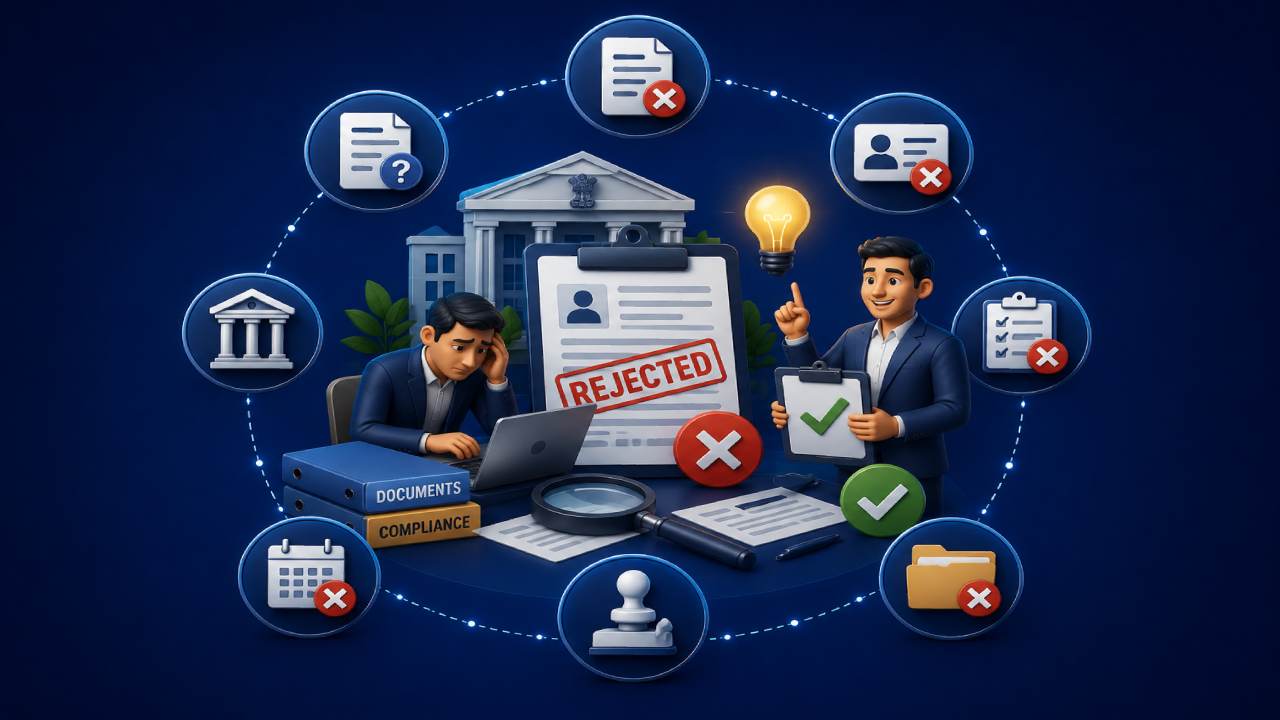
Starting a business in India involves several legal and procedural steps. Yet many entrepreneurs face unexpected delays because of business registration rejection during the incorporation process. A rejected application can waste time, increase costs, and delay business operations. In many cases, the rejection happens because of simple documentation mistakes, incorrect company name selection, or incomplete compliance requirements. India has streamlined the registration process through digital filing systems under the Ministry of Corporate Affairs. However, authorities continue to scrutinise applications carefully before approval. Entrepreneurs who understand the common reasons behind rejection can avoid unnecessary complications and complete registration smoothly.
This article explains why business registration applications get rejected in India, how founders can fix these issues, and what precautions help improve approval chances.
Understanding the Importance of Accurate Business Registration
Business registration creates a legal identity for an organisation. It allows entrepreneurs to operate formally, open bank accounts, raise funding, enter contracts, and comply with taxation requirements. Since registration establishes a legal entity, authorities review incorporation applications carefully. Even minor inconsistencies in documentation or procedural errors may lead to rejection or resubmission requests. Many startups assume registration is only an administrative process. In reality, it forms the legal foundation of the business. Accuracy during incorporation helps avoid future disputes, compliance issues, and operational delays.
Common Reasons for Business Registration Rejection
1. Incorrect or Conflicting Company Name
One of the most common reasons for rejection involves the proposed company name. The Ministry of Corporate Affairs follows strict naming guidelines. Applications often get rejected if the selected name closely resembles an existing company, trademark, or registered brand. Generic names without distinctiveness may also face rejection. Names containing restricted words or regulated expressions without approval usually attract objections from authorities. Entrepreneurs should conduct proper name availability and trademark searches before submitting applications. Selecting a unique and compliant name improves approval chances significantly.
2. Errors in Incorporation Documents
Incorrect information in incorporation forms frequently causes registration rejection. Mistakes involving spelling, addresses, director details, or shareholding patterns create inconsistencies in official records. Authorities carefully review all submitted documents to ensure accuracy and consistency. Even minor differences between PAN records, Aadhaar details, or address proofs may trigger objections. Founders should cross verify every document before submission to avoid delays.
3. Improper Address Proof Submission
Registered office proof is a mandatory requirement during incorporation. Applications often face rejection because entrepreneurs submit incomplete or invalid address documents. Utility bills older than prescribed timelines, unclear rental agreements, or unsigned no objection certificates commonly result in resubmission requests. Authorities may also reject applications if the address details do not match supporting documents properly. Clear and updated documentation helps avoid such issues.
4. Problems with Digital Signature Certificates
Digital Signature Certificates play a crucial role in electronic filing procedures. Expired signatures, incorrect authentication details, or technical mismatches often disrupt the filing process. Directors must ensure their Digital Signature Certificates remain active and linked correctly with official records before starting incorporation. Technical compliance errors may appear minor but often delay approvals considerably.
5. Director Identification Number Issues
Directors involved in incorporation must hold valid Director Identification Numbers where required. Applications may face rejection if directors have disqualified status, incomplete KYC compliance, or mismatched identity details. Authorities regularly monitor director compliance under company law regulations. Entrepreneurs should verify director eligibility before filing incorporation documents. Ignoring director related compliance creates avoidable registration complications.
6. Business Registration Rejection Due to Non Compliance with MCA Rules
The Ministry of Corporate Affairs follows strict procedural rules for company incorporation. Applications not aligned with these regulations may receive rejection notices or requests for clarification. For example, companies planning regulated business activities may require additional approvals from sector authorities before incorporation. Similarly, objects clauses within incorporation documents should clearly reflect lawful business activities. Entrepreneurs must understand applicable legal requirements before filing applications.
7. Trademark Conflicts and Name Approval Problems
Many founders underestimate trademark related issues during registration. A company name may appear available under MCA records but still conflict with an existing trademark. Trademark holders can raise objections if a proposed name creates confusion in the market. Authorities often reject names closely resembling well known brands or protected intellectual property. Conducting trademark searches before finalising a name reduces the risk of future disputes and registration rejection.
Importance of Proper Drafting in Incorporation Documents
Memorandum of Association and Articles of Association form critical incorporation documents. Poor drafting often creates legal inconsistencies or unclear business objectives. Authorities may seek clarification if the objects clause lacks precision or includes restricted activities requiring regulatory approval. Professional drafting ensures the company’s operational purpose remains legally compliant and commercially practical. Businesses exploring company formation india online procedures should prioritise document accuracy from the beginning. Online filing systems simplify submissions, but legal scrutiny remains rigorous.
Errors in Shareholding and Capital Structure
Incorrect shareholding details or inconsistent capital declarations also contribute to business registration rejection. Authorities verify authorised capital, subscriber details, and ownership allocation carefully during incorporation. Startups sometimes make errors in share subscription forms, equity distribution records, or capital calculations. Such inconsistencies may delay approval or require revised filings. Clear ownership planning and accurate financial documentation support smoother incorporation.
Rejection Due to Incomplete Attachments
Many incorporation applications fail because mandatory attachments are missing. Authorities may reject applications lacking identity proofs, consent forms, address records, or statutory declarations. Digital filing systems require proper formatting and complete documentation. Blurred scans, unsigned files, or unreadable documents often trigger technical objections. Entrepreneurs should maintain organised documentation and review attachment requirements carefully before submission.
Sector Specific Approval Requirements
Certain industries in India require prior approval from sector regulators. Businesses operating in financial services, healthcare, education, food services, or insurance sectors may need additional permissions before incorporation. Applications submitted without mandatory sector approvals may face rejection from authorities. Founders should identify industry specific obligations during the planning stage to avoid unnecessary delays.
How to Fix Business Registration Rejection
1. Review the Rejection Notice Carefully
Authorities usually specify the reason for rejection or resubmission. Entrepreneurs should review these observations carefully before responding.
Ignoring specific objections or submitting incomplete corrections often leads to repeated rejection cycles. Understanding the exact issue helps founders resolve problems efficiently.
2. Correct Documentation Errors Promptly
If rejection occurs because of document inconsistencies, entrepreneurs should update records immediately and ensure uniformity across all submissions.
Address mismatches, spelling errors, and identity inconsistencies should be corrected before resubmission. Accurate documentation improves approval speed.
3. Conduct Fresh Name Searches
In cases involving company name rejection, founders should perform detailed MCA and trademark searches before selecting alternative names.
Choosing a distinctive name aligned with regulatory guidelines reduces future objections and intellectual property conflicts.
4. Seek Professional Guidance
Many entrepreneurs attempt self filing without understanding legal and procedural requirements fully. While digital systems simplify incorporation, professional guidance often prevents costly errors. Legal and compliance professionals help verify documentation, review structure suitability, and address procedural requirements accurately. Startups planning to register pvt ltd company in india should especially seek structured legal guidance because private limited companies involve detailed statutory compliance.
How to Prevent Registration Rejection in Future
Preparation remains the best way to avoid incorporation rejection. Entrepreneurs should maintain accurate records, verify identity documents, review legal requirements, and select compliant business names before filing applications. Founders should also evaluate long term operational plans while drafting incorporation documents. Clear business objectives and organised governance structures improve regulatory confidence. Periodic legal reviews during the startup planning phase also help identify risks early.
Importance of Professional Compliance Support
India’s corporate compliance environment continues evolving with increasing digital oversight and stricter verification standards. Professional support helps startups manage incorporation procedures more efficiently. Compliance experts understand MCA filing practices, documentation standards, and sector specific regulations. Their involvement reduces rejection risks and improves filing accuracy. Although some entrepreneurs view professional assistance as an additional expense, it often prevents greater delays and correction costs later.
Conclusion
Business registration rejection can delay startup operations and create unnecessary stress for entrepreneurs. Most rejections occur because of avoidable errors such as incorrect company names, inconsistent documents, missing approvals, or procedural non compliance. Understanding the common reasons behind incorporation rejection helps founders prepare stronger applications and reduce delays. Proper documentation, regulatory awareness, and professional guidance significantly improve approval chances. Business registration should never be treated as a routine formality. A legally compliant and accurately structured incorporation process builds credibility and creates a stable foundation for future growth. Entrepreneurs who invest time in careful planning and compliance preparation often complete registration more smoothly and avoid repeated filing complications.
Frequently Asked QUESTIONS (FAQs)
Why do business registration applications get rejected in India?
Applications commonly face rejection because of incorrect company names, document inconsistencies, missing attachments, or non compliance with MCA guidelines.
Can a rejected incorporation application be resubmitted?
Yes. Entrepreneurs can usually correct the identified issues and resubmit the application within the prescribed timeline.
How can I avoid company name rejection?
Conduct detailed MCA and trademark searches before selecting a company name. Choose a unique and compliant name aligned with regulatory guidelines.
Does trademark conflict affect company registration?
Yes. Authorities may reject names similar to registered trademarks or existing businesses to avoid market confusion.
re address proof errors common during registration?
Yes. Invalid utility bills, incomplete rental agreements, or mismatched address details frequently cause objections during incorporation.
Is professional assistance necessary for business registration?
Professional guidance helps reduce documentation errors and improves compliance accuracy, especially for private limited company incorporation.
What happens if director details are incorrect in incorporation documents?
Incorrect director information may delay approvals or trigger rejection due to identity verification inconsistencies.
How long does incorporation approval usually take in India?
Approval timelines vary depending on document accuracy, business type, and regulatory review. Properly prepared applications generally receive faster approvals.